Showing posts with label Physiology. Show all posts

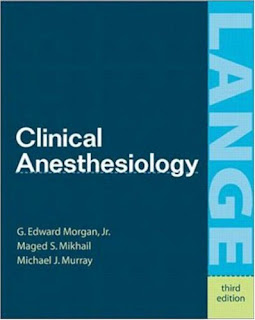
Morgan - Lange Clinical Anesthesiology free medical book download


https://blogger.googleusercontent.com/img/b/R29vZ2xl/AVvXsEhZa5H_xHuzMYaT9vm2mDd8el3NWUWpqKzjF9wNpZl4UzCoGikCaS_HPwbozpRd36nCJeBX86ls2fIJlqzohRKVjfuSIM5JIIuPpTggBIke5AWGLiTz_Fk3tHKHs3iWQBZEkht24ZtiFKmo/s320/41NLe9bdC2L.jpg
Clinical Anesthesiology integrates succinct coverage of basic principles and clinical considerations in the anesthetic management of patients. It features up-to-date discussion of all relevant areas within anesthesiology, including equipment, pharmacology, regional anesthesia, pathophysiology, pain management, anesthetic management, and critical care. Extensive use of case discussions, figures, and tables in each chapter promotes application of the concepts to practice.

Table of contents:

Clinical Anesthesiology
1. The Practice of Anesthesiology
I. Anesthesia Equipment & Monitors
2. The Operating Room: Medical Gas Systems, Environmental Factors, & Electrical Safety
3. Breathing Systems
4. The AnesthesiaMachine
5. Airway Management
6. Patient Monitors
II. Clinical Pharmacology
7. Inhalational Anesthetics
8. Nonvolatile Anesthetic Agents
9. Neuromuscular Blocking Agents
10. Cholinesterase Inhibitors
11. Anticholinergic Drugs
12. Adrenergic Agonists & Antagonists
13. Hypotensive Agents
14. Local Anesthetics
15. Adjuncts to Anesthesia
III. Regional Anesthesia & Pain Management
16. Spinal, Epidural, & Caudal Blocks
17. Peripheral Nerve Blocks
18. Pain Management
IV. Physiology, Pathophysiology, & Anesthetic Management
19. Cardiovascular Physiology & Anesthesia
20. Anesthesia for Patients with Cardiovascular Disease
21. Anesthesia for Cardiovascular Surgery
22. Respiratory Physiology: The Effects of Anesthesia
23. Anesthesia for Patients with Respiratory Disease
24. Anesthesia for Thoracic Surgery
25. Neurophysiology & Anesthesia
26. Anesthesia for Neurosurgery
27. Anesthesia for Patients with Neurological & Psychiatric Diseases
28. Management of Patients with Fluid & Electrolyte Disturbances
29. Fluid Management & Transfusion
30. Acid--Base Balance
31. Renal Physiology & Anesthesia
32. Anesthesia for Patients with Renal Disease
33. Anesthesia for Genitourinary Surgery
34. Hepatic Physiology & Anesthesia
35. Anesthesia for Patients with Liver Disease
36. Anesthesia for Patients with Endocrine Disease
37. Anesthesia for Patients with Neuromuscular Disease
38. Anesthesia for Ophthalmic Surgery
39. Anesthesia for Otorhinolaryngological Surgery
40. Anesthesia for Orthopedic Surgery
41. Anesthesia for the Trauma Patient
42. Maternal & Fetal Physiology & Anesthesia
43. Obstetric Anesthesia
44. Pediatric Anesthesia
45. Geriatric Anesthesia
V. Special Problems
46. Anesthetic Complications

Book details:
Author:Morgan G. Edward, Mikhail Maged S., Murray Michael J.
Publisher:McGraw-Hill/Appleton & Lange; 3 edition
Pages:1042
Size:25.1 MB
Format:PDB

Download
password:DrWael

Extracorporeal Life Support free medical book download

http://farm4.static.flickr.com/3134/3233599607_fb617b2aa8.jpg

This handbook is directed at intensivists, surgeons, pediatricians, residents, perfusionists, nurses and ECMO(extracorporeal membrane oxygenation) technologists involved in the care of patients with respiratory or cardiac failure which may require extracorporeal support. It provides specific information on the mechanics of ECMO, the equipment required, the physiology of extracorporeal support, and the management of patients supported on ECMO. Current results of ECMO and alternative support options are also reviewed in some chapters of this book. The authors' goal is to present clinically useful information in a manner that enables the reader to rapidly assess clinical situations, troubleshoot problems, and understand the expected results of therapy. Today, ECMO support has an important role in most major medical centers caring for critically-ill patients, whether for neonatal respiratory failure, cardiac failure, or for cardiopulmonary support after cardiac surgery or thoracic organ transplantation. No doubt new applications and refinements of this technology will appear in the future.

Table of contents:
Mechanical Ventilation
Extracorporeal Support
Principles of ECMO
Mechanics of ECMO
Safety/Monitoring Devices
Peripheral Access for ECMO Support
Applications and Management of ECMO
Special Management Issues in Caring for Patients of ECMO
Additional Management Issues
Trouble-Shooting
Results
Alternative Treatments

Book details:
Author:Dan M. Meyer , Michael E. Jessen
Publisher:Landes Bioscience
Pages:142
Size:1,697 MB
Format:pdf

Download
password:DrWael

Crush Step 2: The Ultimate USMLE Step 2 Review free medical book download

http://ec1.images-amazon.com/images/I/41CR1ZYV95L.jpg

Product Details
Book Publisher: Hanley & Belfus (30 November, 2002)
ISBN: 1560535423
Book author: Adam Brochert
Amazon Rating: 4.0

Book Description:
Written by Dr. Brochert, who scored in the 99th percentile in Steps1 and 2 of the U.S. Medical Licensing Exam (USMLE), this comprehensive, high-yield review book has been completely updated. It is cram packed with clinical information that has appeared on recent administrations of the USMLE Step 2, and will enable medical students to “crush the boards”. Step 2 questions are more relevant to the clinical practice of medicine and focus on what a first year resident should knowhow to diagnose, manage, and treat common diseases. Coverage includes epidemiology and biostatistics, pharmacology and microbiology, cardiac physiology, and basic EKG pathology. Knowing common and life-threatening diseases in the sub-specialties (orthopedics, urology, ophthalmology, neurosurgery, child psychiatry, vascular surgery, etc.) can increase one’s score substantially.

Download

Crush Step 2: The Ultimate USMLE Step 2 free medical book download

http://www.usmle.net/books/step2/Crush.jpg

Product Details
Book Publisher: Hanley & Belfus (30 November, 2002)
ISBN: 1560535423
Book author: Adam Brochert
Amazon Rating: 4.0

Book Description:
Written by Dr. Brochert, who scored in the 99th percentile in Steps1 and 2 of the U.S. Medical Licensing Exam (USMLE), this comprehensive, high-yield review book has been completely updated. It is cram packed with clinical information that has appeared on recent administrations of the USMLE Step 2, and will enable medical students to “crush the boards”. Step 2 questions are more relevant to the clinical practice of medicine and focus on what a first year resident should knowhow to diagnose, manage, and treat common diseases. Coverage includes epidemiology and biostatistics, pharmacology and microbiology, cardiac physiology, and basic EKG pathology. Knowing common and life-threatening diseases in the sub-specialties (orthopedics, urology, ophthalmology, neurosurgery, child psychiatry, vascular surgery, etc.) can increase one’s score substantially.

Download

Sabiston & Spencer Surgery of the Chest: 2-Volume Set 7 ed free book download

http://covers.elsevier.com/165/9780721600925.jpg

2480 pages
Trim size 8 1/2 X 10 7/8 in
Copyright 2005
$314.00, Hardcover, Reference

Saunders Title
ISBN: 0721600921
ISBN-13: 9780721600925

Description
A brand-new team of editors and a multitude of new international contributors have completely revamped and updated Sabiston and Spencer's classic reference work. The result is today's only comprehensive, up-to-date collection of all essential clinical knowledge in cardiac and thoracic surgery. The contents have been reorganized into three major sections—***** Cardiac Surgery, Pediatric Cardiac Surgery, and Thoracic Surgery. And, more than 50 new chapters have been added to reflect important changes within this rapidly evolving field, including both surgical and medical therapeutic approaches. More than 1,500 illustrations, nearly all of them new to this edition, help to clarify key concepts.

With 200 additional contributors

Reviews
"This is undoubtedly the most comprehensive textbook on surgery of the chest...[It] must be considered an essential reference source not only for all thoracic surgeons, but also for all physicians, residents, and students concerned with diseases of the chest." —Annals of Surgery

Key Features

Features a new organization into three major sections—***** Cardiac Surgery, Pediatric Cardiac Surgery, and Thoracic Surgery—that makes information
Covers hot new topics in thoracic surgery including minimal invasive treatment of lung cancer • multimodal therapy for esophageal cancer • innovative therapies and technology in thoracic surgery • and endoscopic treatment of thoracic disease.
Explores new developments in ***** cardiac surgery, such as catheter-based treatment of coronary disease • advances in cardiac pacing and pacemakers • valve replacement therapy • Left Ventricular Assist Devices • and bypass grafting for coronary
Addresses important new areas of pediatric cardiac surgery, such as cardiac catheterization and catheter-based interventions • transposition of the great arteries • congenital anomalies of the mitral valve • surgery for arrhythmias • and pacemakers in children.
Offers oversight from a brand-new editorial team, and contributions from a multitude of new authors from around the world—to present fresh perspectives on every aspect of the field.

Author Information
By Frank Sellke, MD, Johnson & Johnson Professor of Surgery, Harvard Medical School, Chief, Division of Cardiothoracic Surgery, Beth Israel Deaconess Medical Center, Boson, MA; Scott Swanson, MD, Eugene F. Friedman Professor of Oncology; Chief Division of Thoracic Surgery, Mt. Sinai School of Medicine, New York, NY.; and Pedro J. del Nido, MD, Professor of Surgery, Harvard Medical School, Senior Associate in Cardiovascular Surgery, Children's Hospital, Boston, MA.

Description
A brand-new team of editors and a multitude of new international contributors have completely revamped and updated Sabiston and Spencer's classic reference work. The result is today's only comprehensive, up-to-date collection of all essential clinical knowledge in cardiac and thoracic surgery. The contents have been reorganized into three major sections?***** Cardiac Surgery, Pediatric Cardiac Surgery, and Thoracic Surgery. And, more than 50 new chapters have been added to reflect important changes within this rapidly evolving field, including both surgical and medical therapeutic approaches. More than 1,500 illustrations, nearly all of them new to this edition, help to clarify key concepts.

Audience
Cardiac Surgeons and General Thoracic Surgeons, General Surgeons, Residents and Fellows, and Health Science Libraries

Contents


SECTION I Thoracic

EVALUATION AND CARE
1 Anatomy of the Thorax
2 Imaging the Thorax
3 Preoperative Assessment of the Thoracic Surgery Patient
4 Perioperative Care of the Thoracic Surgical Patient
ENDOSCOPY
5 Endoscopic Diagnosis of Thoracic Disease
6 Endoscopic Therapies for the Airway and the Esophagus
TRAUMA
7 Thoracic Trauma
TRACHEA
8 Tracheal Lesions
BENIGN LUNG DISEASE
9 Congenital Lung Disease
10 Benign Lesions of the Lung
11 Interstitial Lung Diseases
12 Infectious Lung Diseases
13 Surgery for Emphysema
14 Lung Transplantation
LUNG CANCER
15 Screening for Lung Cancer
16 Lung Cancer Work-Up and Staging
17 Lung Cancer – Surgical Treatment
18 Lung Cancer – Minimally Invasive Treatment
19 Lung Cancer – Multimodal Therapy
20 Lung Cancer – Surgical Strategies for Tumors Invading Chest Wall
21 Anterior Approach to Pancoast Tumors
OTHER LUNG MALIGNANCY
22 Other Primary Tumors of the Lung
23 Secondary Lung Tumors
CHEST WALL
24 Congenital Chest Wall Deformities
25 Chest Wall Tumors
26 Chest Wall Reconstruction
27 Thoracic Outlet Syndrome: Dorsal Sympathectomy
PLEURA
28 Benign Pleural Disease (including chylothorax, empyema, fibrothorax, pneumothorax)
29 Malignant Pleural and Pericardial Effusions
30 Pleural Tumors
DIAPHRAGM
31 Diaphragmatic Disorders & Therapy
32 Congenital Diaphragmatic Hernias
ESOPHAGUS – BENIGN DISEASE
33 Esophageal Physiology and Function
34 Surgery for Congenital Lesions of the Esophagus
35 Treatment of Benign Esophageal Disease
ESOPHAGUS - CANCER
36 Esophageal Cancer – Work-Up and Staging
37 Esophageal Resection and Replacement
38 Esophageal Cancer – Multimodal Therapy
MEDIASTINUM
39 Mediastinal Anatomy and Mediastinoscopy
40 Anterior Mediastinal Masses
41 Middle Mediastinum
42 The Posterior Mediastinum
43 Surgical Treatment of Hyperhidrosis
THE FUTURE
44 The Use of Genetic Science in Thoracic Disease
45 Innovative Therapy and Technology


SECTION II ***** Cardiac

BASIC SCIENCE
46 ***** Cardiac Anatomy
47 Atherosclerosis, Restenosis and Vascular Biology
48 Physiology of the Coronary Circulation
49 Physiology of the Myocardium
50 Ventricular Mechanics
51 Shock and Sepsis
52 Tissue Regeneration
53 Blood Coagulation, Transfusion, and Conservation
DIAGNOSTIC PROCEDURES
54 Coronary Angiography, Valve and Hemodynamic Assessment
55 CT Applications in Cardiovascular Disease
56 Cardiovascular Magnetic Resonance Imaging in Cardiovascular Diagnosis
57 Nuclear Cardiology and PET in the Assessment of Patients with Cardivascular Disease
58 Diagnostic Echocardiography
MEDICAL AND CATHETER-BASED TREATMENT OF CARDIAC DISASE
59 Interventional Cardiology
60 Medical Management of Acute Coronary Syndromes
61 Non Antherosclorotic Vascular Disease
62 Pharmacologic Management of Heart Failure
63 The Coronary Circulation: Dietary and Pharmacologic Management of Atherosclerosis
PERIOPERATIVE AND INTRAOPERATIVE CARE OF THE CARDIAC SURGICAL PATIENT
64 ***** Cardiac Anesthesia
65 Critical Care for the ***** Cardiac Patient
66 Cardiopulmonary Bypass---Technique and Pathophysiology
67 Myocardial Protection
68 Clinical Quality and Cardiac Surgery
SURGICAL MANAGEMENT OF AORTIC DISEASE
69 Surgery of the Aortic Root and Ascending Aorta
70a Surgery of the Aortic Arch
70b Descending Thoracic and Thoracoabdominal Aortic Surgery
70c Acute Aortic Dissection
70d Chronic Aortic Dissection
71 Endovascular Therapy for the Treatment of Thoracic Aortic Aneurysms and Dissections
72 Occlusive Disease of Branches of the Aorta and Peripheral Angiography Intervention


I Occlusive Disease of the Supraaortic Trunk and Management of Simultaneous Surgical Carotid/Coronary Disease


II Peripheral Angiography and Percutaneous Intervention

SURGICAL MANAGEMENT OF VALVULAR HEART DISEASE
73 Valve Replacement Therapy Options, History and Valve Types
74 Acquired Aortic Valve Disease
75 Acquired Disease of Mitral Valve
76 Acquired Disease of the Tricuspid Valve
77 Prosthetic Valve Endocarditis
78 Thrombosis and Thromboembolism of Prosthetic Cardiac Valves and Extracardiac Prostheses
79 Robotic and Novel Visualization Systems
MANAGEMENT OF CARDIAC ARRHYTHMIAS
80 Cardiac Devices for the Treatment of Bradyarrhythmias and Tachyarrhythmias
81 Catheter Ablation of Arrhythmias
82 Surgical Treatment of Cardiac Arrhythmias
SURGICAL TREATMENT OF CORONARY ARTER DISEASE AND ITS COMPLICATIONS
83 Coronary Artery Bypass Grafting
84 Alternative Approaches to Surgical Coronary Artery Bypass Grafting
85 Bypass Conduit Options
86 Redo Coronary Artery Bypass Graft (CABG)
87 Ischemic MR and Rupture of Papillary Muscles
88 Postinfarction Ventricular Septal Defect
89 Therapeutic Angiogenesis
90 Transmyocardial Laser Revascularization
SURGICAL MANAGEMENT OF HEART FAILURE
91 Pericardium and Constrictive Pericarditis
92 Surgical Management of Hypertrophic Cardiomyopathy
93 Left Ventricular Assist Devices
94 Total Artificial Heart
95 Heart Transplantation
96 Heart-Lung Transplantation
97 Left Ventricular Reconstruction and the Surgical Treatment of the Failing Heart
98 Cell Transplantation for Cardiovascular Disease
99 Surgery for Pulmonary Embolization
100 Tumors of the Heart


SECTION III Congenital Heart Surgery

101 Embryology and Molecular Genetics
102 Segmental Anatomy
103 Diagnostic Imaging: Echocardiography and Magnetic Resonance Imaging
104 Cardiac Catheterization and Catheter-Based Interventions
105a Surgical Approaches and Cardiopulmonary Bypass
105b Mechanical Circulatory Support in Children
106 Pediatric Anesthesia and Critical Care
107 Congenital Tracheal Diseases
108 Patent Ductus Arteriosus and Vascular Rings
109 Coarcation, Aortopulmonary Collaterals and Arterio-pulmonary Shunts
110 Atrial Septal Defect and Cor Triatriatum
111 Surgical considerations in pulmonary vein anomalies
112a Atrioventricular Canal Defects: Partial (Ostium Primum and Transitional)
112b Atrioventricular Canal Defects: Complete Canal Defects
113 Ventricular Septal Defect and Double-Outlet Right Ventricle
114 Pulmonary Atresia With Intact Ventricular Septum
115 Tetralogy of Fallot with Pulmonary Stenosis
116 Tetralogy of Fallot with Pulmonary Atresia
117 Right Ventricle to Pulmonary Artery Conduits
118 Truncus Arteriosus and Aortopulmonary Window
119 Interrupted Aortic Arch
120 Surgery for Congenital Anomalies of the Aortic Valve and Root
121 Surgery for Congenital Anomalies of the Coronary Arteries
122 Transposition of the Great Arteries
123 Transposition of the Great Arteries Complex
124 Anatomically Corrected Transposition
125 Congenital Anomalies of the Mitral Valvenbr
126 Obstruction of the Left Ventricular Outflow and Shone?s Syndrome
127 Hypoplastic Left Heart Syndrome
128 Management of Single Ventricle and Cavopulmonary Connections
129 Ebstein?s Anomaly
130 ***** Congenital Cardiac Surgery
131 Surgery for Arrhythmias and Pacemakers in Children


Download | Mirror

Methamphetamine Use: Clinical and Forensic Aspects free book download


ISBN: 0849314771
Author: Errol Yudko
Publisher: CRC Press
Edition: (June 26, 2003)
Hardcover: 360 pages

Summary:A man is accused of attempted murder of a former crystal meth addict. He claims he shot in self-defense, responding to the extremely aggressive behavior the victim was exhibiting. How will this play out in court? Most likely, the prosecution and the defense will call various expert witnesses - perhaps neurologists, psychologists, pathologists - each with testimonies based on their own theoretical viewpoints, but none with a truly comprehensive knowledge of the background and effects of methamphetamine (MA) use. This will cause confusion, complexity, and their testimonies may not comply with Daubert standards.Written by a multidisciplinary team of experts, Methaphetamine Use: Clinical and Forensic Aspects examines MA use and abuse from clinical, forensic, and criminal justice perspectives. It is the first to cover virtually every aspect, reviewing the history, pharmacology, pathology, physiology, treatment, and evidentiary value of MA and its use. It addresses Daubert considerations and victim/witness credibility, competency to confess and to stand trial, criminal responsibility, extreme emotion as mitigation to murder, and dangerousness. It also details statutes and case law to represent perspectives of both the prosecution and the defense.Growing in popularity more than any other illegal drug, methamphetamine has been shown to produce a paranoid psychotic state, which may recur months or years after use. Methamphetamine Use: Clinical and Forensic Aspects provides a comprehensive, critical survey of the current knowledge and policies regarding the use and abuse of this dangerous and ubiquitous substance.

Download

PDQ Physiology (Book with mini CD-ROM) free book download


Product Details
Book Publisher: B.C. Decker (15 April, 2002)
ISBN: 1550091484
Book author: Uwe Ackermann

Download
Pass: http://s15.invisionfree.com/lekar/

or

Download
Pass: http://s15.invisionfree.com/lekar/

Amylin - Physiology &Pharmacology free book download


Title : Amylin - Physiology and Pharmacology
Author : Andrew Young
Publisher: Academic Press
ISBN / ASIN: 0120329549

Deciphers amylin’s physiology and reveals previously unrecognized mechanisms fundamental to control body weight and fuel homeostasis. Also discusses therapeutic utility of amylin as the first new medicine to treat diabetes since insulin.

*Provides a current comprehensive treatment of amylin the hormone
*Identifies the majority of amylin’s physiologic functions


Download

Fisiología Humana [Spanish] free book download


Descripción:
Ha sido escrito por docentes pertenecientes a un mismo grupo académico y que durante varios años han coordinados y complementado sus esfuerzos en la enseñanza de la Fisiología a estudiantes de diversas carreras de la Salud.

DOWNLOAD PART 3
DOWNLOAD PART 2
DOWNLOAD PART 1

Clinical Physiology MRS free book download


A brief, to-the-point presentation of the most important points in clinical physiology. Enables the reader to see cardio-pulmonary-renal physiology as well as immunology and other areas as a clear conceptual whole.


Download

Human Physiology free book download


* Publisher: McGraw Hill Higher Education
* Number Of Pages:
* Publication Date: 2004
* ISBN-10 / ASIN: 0072919280
* ISBN-13 / EAN: 9780072919288
* Binding: Hardcover

Product Description:
#1 selling book with great explanations, and just enough anatomy!
Now in its 10th edition, Fox is the best-selling book in this market. Clear explanations and a solid learning framework have been market tested and refined. Fox help students master the fundamentals by providing appropriate anatomical detail.
Human Physiology, Tenth Edition, is intended for the one-semester Human Physiology course often taken by allied health and other biology students.

Part 2
Part 1

Cardiac Gap Junctions: Physiology, Regulation, Pathophysiology and Pharmacology free book download


Publisher: S. Karger Publishers (USA)
Number Of Pages: 148
Publication Date: 1998-01
ISBN-10 / ASIN: 3805565674
ISBN-13 / EAN: 9783805565677
Binding: Hardcover

Product Description:
In recent years, gap junction research in the cardiovascular system has considerably improved the understanding of cardiac function and the vasculature in health and disease. The present book focuses on the communication of intercellular gap junctions in the cardiovascular system but also includes aspects of physiology, medicine and cell biology.

DOWNLOAD

Schaum’s Outline of Human Anatomy and Physiology free medical book download


Product Details
Book Publisher: McGraw-Hill (24 July, 2001)
ISBN: 0071369767
Book author: Kent M. Van De Graaff, R. Ward Rhees
Amazon Rating: 4.5

Book Description:
Boiled-down essentials of the top-selling Schaum’s Outline series for the student with limited time
What could be better than the bestselling Schaum’s Outline series? For students looking for a quick nuts-and-bolts overview, it would have to be Schaum’s Easy Outline series. Every book in this series is a pared-down, simplified, and tightly focused version of its predecessor. With an emphasis on clarity and brevity, each new title features a streamlined and updated format and the absolute essence of the subject, presented in a concise and readily understandable form.

Graphic elements such as sidebars, reader-alert icons, and boxed highlights stress selected points from the text, illuminate keys to learning, and give students quick pointers to the essentials.

Designed to appeal to underprepared students and readers turned off by dense text
Cartoons, sidebars, icons, and other graphic pointers get the material across fast
Concise text focuses on the essence of the subject
Delivers expert help from teachers who are authorities in their fields
Perfect for last-minute test preparation
So small and light that they fit in a backpack!

zupload.com

Mathematical Physiology free medical book download


Title : Mathematical Physiology
Author : James Keener , James Sneyd
Publisher: Springer
ISBN : 0 - 387 - 98381 - 3
PDF 788 pages English

Mathematical Physiology provides an introduction into physiology using the tools and perspectives of mathematical modeling and analysis. It describes ways in which mathematical theory may be used to give insights into physiological questions and how physiological questionss can in turn lead to new mathematical problems.
The book is divided into two parts, the first dealing with the fundamental principles of cell physiology, and the second with the physiology of systems. In the first part, after an introduction to basic biochemistry and enzyme reactions, the authors discuss volume control, the membrane potential, ionic flow through channels,
excitability, calcium dynamics, and electrical bursting. This first part cocludes with spatial aspects such as synaptic transmission, gap junctions, the linear cable equation, nonlinear wave propagation in neurons, and calcium waves.
In the second part, the human body is studied piece by piece, beginning with an introduction to electrocardiology, followed by the physiology of the circulatory system, blood, muscle, hormones, and kidneys. Finally the authors examine the digestive system and the visual system, ending with the inner ear.
This book will be of interest to researchers, to graduate students and advanced undergraduate students in applied mathematics who wish to learn how to build and analyze mathematical models and to become familiar with new areas of application, as well as to physiologists interested in learning about theoretical approaches to their work.
The inclusion of numerous exercises and models could be used to add further interest and challenge to traditional courses taught by applied mathematicians, bioengineers, and physiologists.


Download
 

Try More Free Books

CATEGORIES

If you get any link broken please inform me. I will solv the problem within 24 hours.For contact with me Click here.

Top Commenters

Widget by SamSumon
    If you enjoyed this post, make sure you subscribe as an Reader!